Energy drinks: preliminary heart safety warning
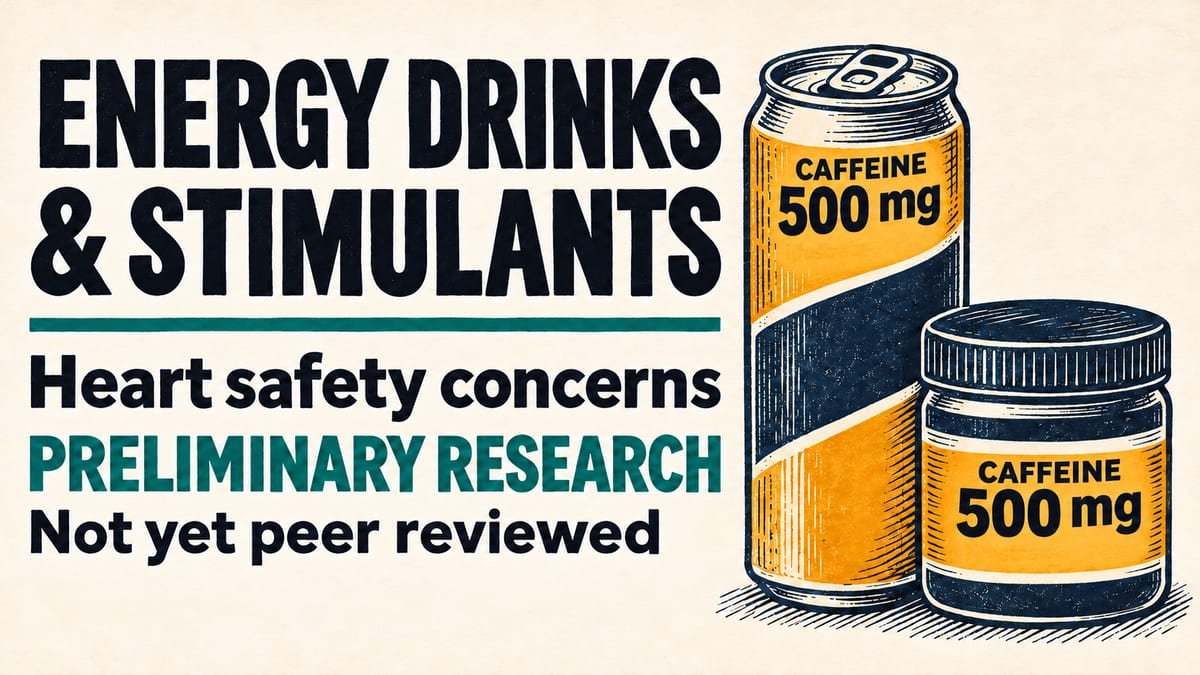
The American Heart Association has highlighted a preliminary heart safety concern involving energy drinks and stimulant supplements, especially in adults aged 18 to 34.
Its release describes a conference abstract that has not been peer reviewed. [1]
Main findings
Of 28,345 safety reports (2017–2025), 854 involved caffeine/stimulants; 27,491 involved other products.
Compared with other reports:
- Cardiac arrest (heart stops pumping effectively): about 11 times higher reporting.
- Heart attack: about 4.5 times.
- Abnormal rhythms in the heart’s lower chambers, or palpitations (noticeable heartbeats): about four times.
- Raised heart rate: nearly three times; chest pain: 2.71 times; fainting: about twice.
About 45% of stimulant-related heart reports concerned adults aged 18–34. Patterns were similar in men and women. [1]
These compare reporting, not personal risk. Unknown consumption and unreported events limit interpretation; associations cannot establish causation. [1]
For readers
When discussing caffeine intake with a health professional, include energy drinks and stimulant supplements. [1]
For health professionals
The researchers recommend asking younger patients with palpitations (noticeable heartbeats), chest pain or fainting about recent and regular use. [1]
What happens next?
Further research and systematic safety monitoring are needed. [1]
Sources
American Heart Association. News release, 2 November 2026. Abstract MDP0323.