Does Berberine Lower Blood Sugar, Cholesterol, and Body Weight?
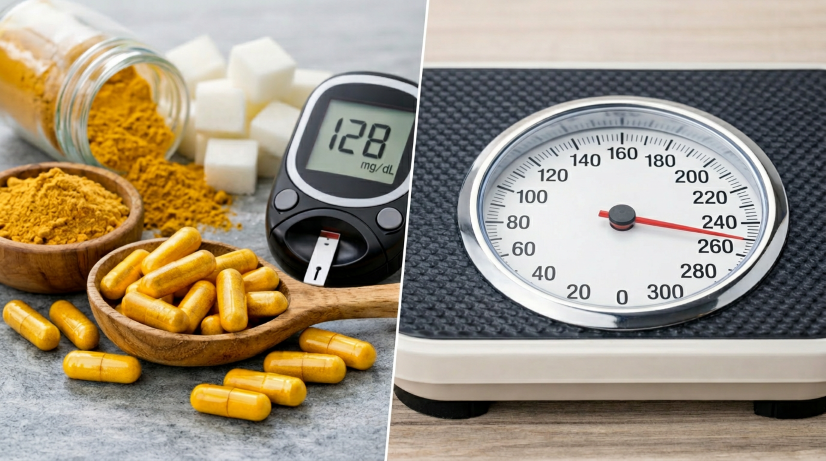
Berberine produces real, measurable improvements in blood sugar and cholesterol in people with metabolic disease — backed by dozens of RCTs. Weight-loss effects are modest and do not support the viral “nature’s Ozempic” label. Significant drug interactions and limited long-term safety data require medical supervision before use.
“Berberine is a natural supplement that lowers blood sugar as effectively as Metformin, reduces cholesterol, and promotes significant weight loss — earning it the nickname ‘nature’s Ozempic’.”
Berberine genuinely moves metabolic markers — multiple meta-analyses of randomised controlled trials show meaningful reductions in blood sugar, LDL cholesterol, and triglycerides in people with Type 2 diabetes, pre-diabetes, or high cholesterol. That evidence is real and worth taking seriously.
But it is not “nature’s Ozempic.” Weight-loss results in clinical trials are modest — roughly 0.5–2 kg on average — inconsistent, and nowhere near the 10–15% body weight reduction seen with GLP-1 receptor agonists like semaglutide. That comparison is marketing, not medicine.
Use with caution: Berberine interacts with liver enzymes that process many prescription drugs, is contraindicated in pregnancy, and has limited safety data beyond six to twelve months.
What the Evidence Says
✅ Supported — Blood Sugar & Insulin Resistance
This is berberine’s best-evidenced application. The 2022 meta-analysis by Xie et al.1 pooled 37 RCTs involving 3,048 patients with Type 2 diabetes and found:
- Fasting blood glucose (FPG) reduced by 0.82 mmol/L (~15 mg/dL) — a clinically relevant reduction
- HbA1c (the 3-month blood sugar average) reduced by 0.63% — comparable to some oral hypoglycaemic agents
- Post-meal blood glucose reduced by 1.16 mmol/L
A 2024 meta-analysis of 50 RCTs (4,150 participants)2 reached very similar conclusions. An umbrella meta-analysis in Clinical Therapeutics (2024)3 covering 11 prior meta-analyses confirmed consistent reductions in fasting glucose, HbA1c, and insulin resistance (HOMA-IR) across T2DM and PCOS populations.
How does it work? Berberine activates AMPK (AMP-activated protein kinase) — the body’s metabolic master switch. This helps muscles absorb more glucose and slows the liver’s new glucose production. Crucially, this appears to work only when glucose is already elevated, meaning hypoglycaemia risk is low when berberine is used alone.
Key limitation: Most trials were short-term (8–24 weeks) and over 87% were conducted in China. Whether results fully translate to diverse populations with different diets, gut microbiomes, and metabolic patterns is not yet established. Many trials also had unclear blinding.
✅ Supported — LDL Cholesterol & Triglycerides
A well-conducted 2023 meta-analysis from the University of Hong Kong4 evaluated 18 placebo-controlled RCTs (1,788 participants) for dyslipidaemia:
- LDL (“bad”) cholesterol reduced by 0.46 mmol/L (~18 mg/dL) — clinically meaningful
- Total cholesterol reduced by 0.48 mmol/L
- Triglycerides reduced by 0.34 mmol/L
- HDL (“good” cholesterol) increased modestly by 0.06 mmol/L, with greater benefit in women than men
A 2024 umbrella review of 13 meta-analyses (17,256 participants)56 confirmed this pattern. Berberine appears to act by inhibiting PCSK9 — the same protein targeted by some expensive injectable cholesterol medications — though the effect magnitude is smaller.
Caveats: High heterogeneity between studies (I² >72% in many analyses). Combination products (berberine + red yeast rice) outperform berberine alone. Mostly Chinese populations studied.
🟡 Promising but Overstated — Waist Circumference More Consistent Than Total Weight
The “nature’s Ozempic” label is where berberine’s reputation has outrun its evidence. Actual numbers from the best available reviews8:
- Body weight: Average reduction of ~2.07 kg in one pooling; a 2023 umbrella review found overall body weight reduction was not statistically significant (−0.86 kg; 95% CI −2.12 to +0.41).
- BMI: Small reductions (~−0.3 to −0.5 kg/m²) — significant in some poolings, not in others.
- Waist circumference: More consistent reductions of 1.3–2.75 cm, suggesting a possible specific effect on abdominal fat.
Compare to semaglutide (Ozempic/Wegovy): major RCTs show 10–15% total body weight reduction. Berberine, at best, achieves roughly 2 kg over 12 weeks. The “Ozempic” comparison has no head-to-head clinical evidence and could mislead people with obesity into avoiding effective treatment.
🟡 Promising — Non-Alcoholic Fatty Liver Disease (NAFLD)
A 2024 meta-analysis (10 RCTs, 811 patients with NAFLD)7 found berberine significantly improved liver enzyme levels (ALT, AST, GGT), triglycerides, total cholesterol, LDL, insulin resistance (HOMA-IR), and BMI — with only mild gastrointestinal side effects reported. This is an emerging area with promising but still limited evidence.
❌ Not Supported — Equivalence to GLP-1 Drugs (“Nature’s Ozempic”)
No clinical trial has shown berberine producing 10% body weight reduction or replicating the mechanisms of semaglutide or tirzepatide. GLP-1 receptor agonists act on brain satiety centres, slow gastric emptying, and drive profound caloric reduction via hormonal signalling. Berberine does not do this. The viral social media comparison has no head-to-head clinical evidence and should be disregarded.
Safety — What You Need to Know
Berberine is not a harmless wellness supplement. Because it has drug-like effects, it carries real risks.
| RISK | WHAT IT MEANS |
|---|---|
| GI side effects | Diarrhoea, constipation, stomach cramps, and nausea affect ~20–30% of users, especially in the first weeks. Taking smaller doses with food reduces this. |
| ⚠️ Drug interactions | Berberine inhibits CYP3A4, CYP2D6, and CYP2C9 liver enzymes. A clinical study showed CYP2D6 activity dropped ninefold during use.9 This raises blood levels of statins, cyclosporine (transplant), digoxin (heart), Warfarin (blood thinning), some blood pressure drugs, and diabetes medications. |
| Hypoglycaemia | When combined with diabetes medications (metformin, sulfonylureas, insulin), berberine can cause dangerously low blood sugar. Do not self-combine without medical supervision. |
| 🚫 Pregnancy / infants | CONTRAINDICATED. Berberine crosses the placenta and can cause kernicterus (severe brain injury) in newborns. Do not use during pregnancy, breastfeeding, or in infants. |
| Long-term safety | Safety data beyond 6–12 months is limited. Doses studied in trials: 0.4–1.5 g/day. Long-term cardiovascular outcomes have not been studied. Metformin has 60+ years of outcome data. Berberine does not. |
| Supplement quality | Not TGA-approved (Australia) or FDA-approved (US) as a drug. Purity, dose accuracy, and contamination are not guaranteed. Choose products with third-party testing (for example, USP or NSF). |
Why We Rate It This Way
We rate berberine Grade B — Plausible for blood sugar and lipid effects in metabolic disease. Here is why this is not rated higher:
- Volume ≠ certainty. 300+ RCTs and 54 systematic reviews exist. But quantity of low-quality evidence is not the same as high-quality evidence. The GRADE certainty for most outcomes is low to moderate.
- Geographic concentration. 87% of primary RCTs come from China. This affects how confidently we can generalise results to other populations with different diets, gut microbiomes, and metabolic patterns.
- High heterogeneity. Most meta-analyses report I² >70%, meaning individual studies vary widely in their results — reducing confidence in pooled estimates.
- Short study duration. Most trials run 8–24 weeks. We do not know whether effects persist, strengthen, or diminish over years.
- No hard outcome data. Berberine moves biomarkers (glucose, cholesterol). There is no evidence yet that it reduces heart attacks, strokes, kidney failure, or death — the outcomes patients ultimately care about.
- Weight loss claims do not meet the bar. Body weight reduction is small and inconsistent. The “nature’s Ozempic” label is not supported by any direct comparison trial.
What This Means for You
| YOUR SITUATION | WHAT THE EVIDENCE SUGGESTS |
|---|---|
| T2DM or pre-diabetes | May be a reasonable adjunct under medical supervision — especially if you cannot tolerate or afford standard medications. It should not replace metformin or other proven drugs without your doctor’s guidance. |
| High cholesterol | Modest LDL reduction is plausible. Not a statin replacement, but may complement lifestyle changes — with your doctor’s knowledge. |
| Trying to lose weight | Expect little. Average trial weight loss is 0.5–2 kg over 12 weeks. This does not substitute a calorie deficit, exercise, or prescribed weight-loss treatment. |
| ⚠️ On multiple medications | Check for interactions before starting. Critical if you take Warfarin, any immunosuppressant, a statin, digoxin, or any diabetes drug. |
| 🚫 Pregnant / breastfeeding | Do not use berberine. |
If you are considering berberine, speak with your GP or pharmacist first and mention all medications you take. Never discontinue any prescribed medication in favour of berberine without medical advice.
Evidence Summary Table
| Study / Year | Type | N | Outcome | Key Result | Risk of Bias |
|---|---|---|---|---|---|
| Xie et al. 2022 | MA, 37 RCTs | 3,048 | FPG, HbA1c, 2hPBG in T2DM | FPG −0.82 mmol/L; HbA1c −0.63% | Moderate |
| Yin et al. 2024 | MA, 50 RCTs | 4,150 | FPG, LDL, TG in T2DM | FPG −0.59; LDL −0.30 mmol/L | Moderate |
| Nazari et al. 2024 | Umbrella MA (11) | Large | FBG, HbA1c, HOMA-IR, CRP | Sig. reductions all; high heterogeneity | Mod–High |
| Blais et al. 2023 | MA, 18 RCTs | 1,788 | LDL, TC, TG, HDL | LDL −0.46; TG −0.34 mmol/L | Moderate |
| Li et al. 2025 (MetS) | MA, 12 RCTs | 889 | FPG, TG, LDL, BP, WC | FPG, TG, LDL, WC sig.; BP not sig. | Moderate |
| Nie et al. 2024 (NAFLD) | MA, 10 RCTs | 811 | Liver enzymes, lipids, BMI | All markers sig. improved | Moderate |
| Zamani et al. 2020 | MA, 12 RCTs | ~700 | BW, BMI, WC, CRP | BW −2.07 kg; BMI −0.47; WC −1.08 cm | Moderate |
| Huang et al. 2012 | RCT crossover | ~18 | CYP enzyme inhibition | CYP2D6 −9×; CYP3A4 inhibited | Low (small N) |
References
- Xie W et al. Glucose-lowering effect of berberine on type 2 diabetes: A systematic review and meta-analysis. Front Pharmacol. 2022;13:1015045. PMID 36467075 ↗
- Yin D et al. Effects of administering berberine alone or in combination on type 2 diabetes mellitus: a systematic review and meta-analysis. Front Pharmacol. 2024;15:1455534. PMID 39640489 ↗
- Nazari A et al. The effect of berberine supplementation on glycemic control and inflammatory biomarkers in metabolic disorders: an umbrella meta-analysis. Clin Ther. 2024;46(2):e64–e72. PMID 38016844 ↗
- Blais JE et al. Overall and sex-specific effect of berberine for the treatment of dyslipidemia in adults: a systematic review and meta-analysis. Drugs. 2023;83(5):403–427. PMID 36941490 ↗
- Hernandez AV et al. Impact of berberine or berberine combination products on lipoprotein, triglyceride and biological safety marker concentrations in patients with hyperlipidemia. J Alt Comp Nutr. 2024;21(2):242–259. PMID 37183391 ↗
- Li D et al. Efficacy and safety of berberine on the components of metabolic syndrome: a systematic review and meta-analysis of randomized placebo-controlled trials. Front Pharmacol. 2025;16:1572197. PMC12307485 ↗
- Nie Q et al. The clinical efficacy and safety of berberine in the treatment of non-alcoholic fatty liver disease: a meta-analysis and systematic review. J Transl Med. 2024;22(1):225. PMID 38429794 ↗
- Zamani M et al. The effect of berberine supplementation on obesity parameters, inflammation and liver function enzymes: A systematic review and meta-analysis of RCTs. Clin Nutr ESPEN. 2020;38:43–49. PMID 32690176 ↗
- Huang Z et al. Repeated administration of berberine inhibits cytochromes P450 in humans. Eur J Clin Pharmacol. 2012. PMC4898966 ↗
- Guo Y et al. Berberine and health outcomes: an overview of systematic reviews. BMC Complement Med Ther. 2025. PMC12016319 ↗